
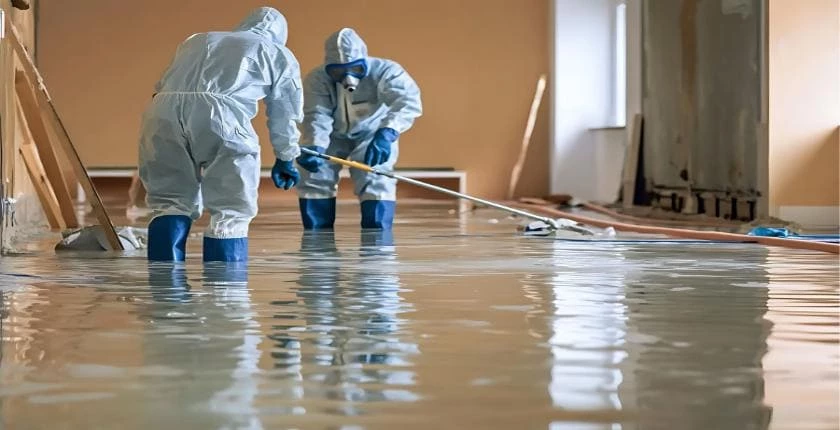
Flood Damage Cleaning
Get in TouchAt Cleaning 24x7, we provide complete restoration and flood recovery solutions for properties affected by water intrusion and across the UK.
Flooding caused by storms, plumbing failures, blocked drains, or rising groundwater can lead to structural decay, contamination, and long-term safety hazards.
Our teams deliver rapid water extraction, structural drying, sanitation, mould prevention, and full property recovery for residential, commercial, and public buildings, ensuring fast, compliant, and cost-effective restoration.
What Does Flood Damage Cleaning Involve for Properties?
Flood damage cleaning begins with a detailed assessment of the water source, contamination category, and the structure's overall impact.
Technicians remove standing water using industrial pumps, extract saturated materials such as carpets and insulation, tand hen deploy commercial air movers and dehumidifiers to dry the property.
Surfaces are disinfected, deodorised, and checked for structural integrity, followed by preventative measures to limit future water ingress. Full repair or restoration may be required for extensive damage.
How Much Does Professional Flood Restoration Cost?
The cost of flood restoration starts at around £500 for minor drying and cleaning, but exceed £10,000 for severe incidents requiring structural repair, deep cleaning, or material replacement.
Costs are influenced by water contamination type, property size, moisture levels, and the extent of damage to flooring, walls, and contents.
Contact Cleaning 24x7 to get customised prices for flood damage restoration at your property.
What Are the Common Causes of Flood Damage Across ?
Common causes of flood damage include:
Extreme rainfall – Leading to flash floods and rapid stormwater build-up.
Overflowing rivers or streams – Affecting homes in low-lying or riverside areas.
Drainage failures – Blocked, collapsed, or overloaded drains causing internal flooding.
Plumbing failures – Burst pipes, faulty appliances, or leaking systems.
Surface water accumulation – Particularly in areas with poor drainage or paved run-off.
Groundwater saturation – More common in rural zones or after prolonged rainfall.
Can Emergency Water Extraction Services Be Deployed Quickly?
Emergency water extraction services offer rapid response, often within one to three hours depending on availability.
Prompt action reduces structural weakening, prevents mould growth, and protects flooring and furnishings from further damage. Teams arrive with submersible pumps, truck-mounted extractors, moisture sensors, and containment materials to begin the drying process immediately.
Do Flood Cleaning Specialists Handle Both Residential and Commercial Properties?
Flood cleaning specialists support both residential and commercial sites, adapting their methods to each environment. Services cover homes, flats, offices, warehouses, healthcare sites, schools, and hospitality premises.
Commercial properties often require faster turnaround times, regulatory compliance, and coordination with insurers or facilities managers.
How Long Does the Drying and Dehumidifying Process Take?
Light flood damage cleaning may be resolved in 2–3 days, while more severe incidents can require 1–3 weeks of continuous drying. Drying times depend on the amount of water present, building materials, humidity levels, and ventilation conditions.
Moisture mapping tools such as thermal imaging and hygrometers help monitor progress and determine when repairs or reoccupation can safely begin.
What Are the Health Risks of Untreated Water Damage Buildings?
Untreated water damage increases the risk of mould growth, which may cause respiratory problems, allergies, and infections. Grey or black water introduces harmful bacteria, viruses, and parasites, creating significant health hazards for occupants.
Long-term exposure can attract pests and weaken structural materials such as subfloors, ceilings, and wall systems.
What Equipment Is Used by Flood Damage Cleaning Teams Across ?
Flood restoration teams use a variety of advanced equipment, including:
Truck-mounted extractors – For large-scale water removal.
Submersible pumps – For deep standing water and basements.
Industrial dehumidifiers – To accelerate structural drying.
Axial and centrifugal air movers – To increase air circulation and moisture removal.
HEPA filtration units – To improve air quality and remove airborne particles.
Ozone generators – For odour neutralisation after drying.
Thermal cameras and moisture meters – For monitoring hidden moisture.
Foggers and sprayers – For applying disinfectants and biocides.
Protective PPE – To ensure safe handling of contaminated materials.
Is Mould Prevention Part of Flood Recovery Services?
Mould prevention is a critical component of flood damage cleaning as our technicians apply antimicrobial and antifungal treatments to vulnerable areas, use dehumidifiers to reduce humidity, and inspect hidden spaces such as wall cavities or crawl areas for residual moisture.
If mould is already present, remediation includes containment, HEPA vacuuming, surface treatment, and sealing to prevent recurrence.
Contact Cleaning 24x7 for professional assistance with flood restoration services.